
Delta Force Mandelbrick Guide: How the Rise Series Decode System Actually Works
If you've watched a Delta Force pro scrim and wondered why teams sprint past free loot to fight over a glowing brick, this guide explains it. The Mandelbrick is the single most important objective in Delta Force's competitive Rise Series format — collect two of them, and you win the match instantly, no matter how many kills the other team has stacked up.
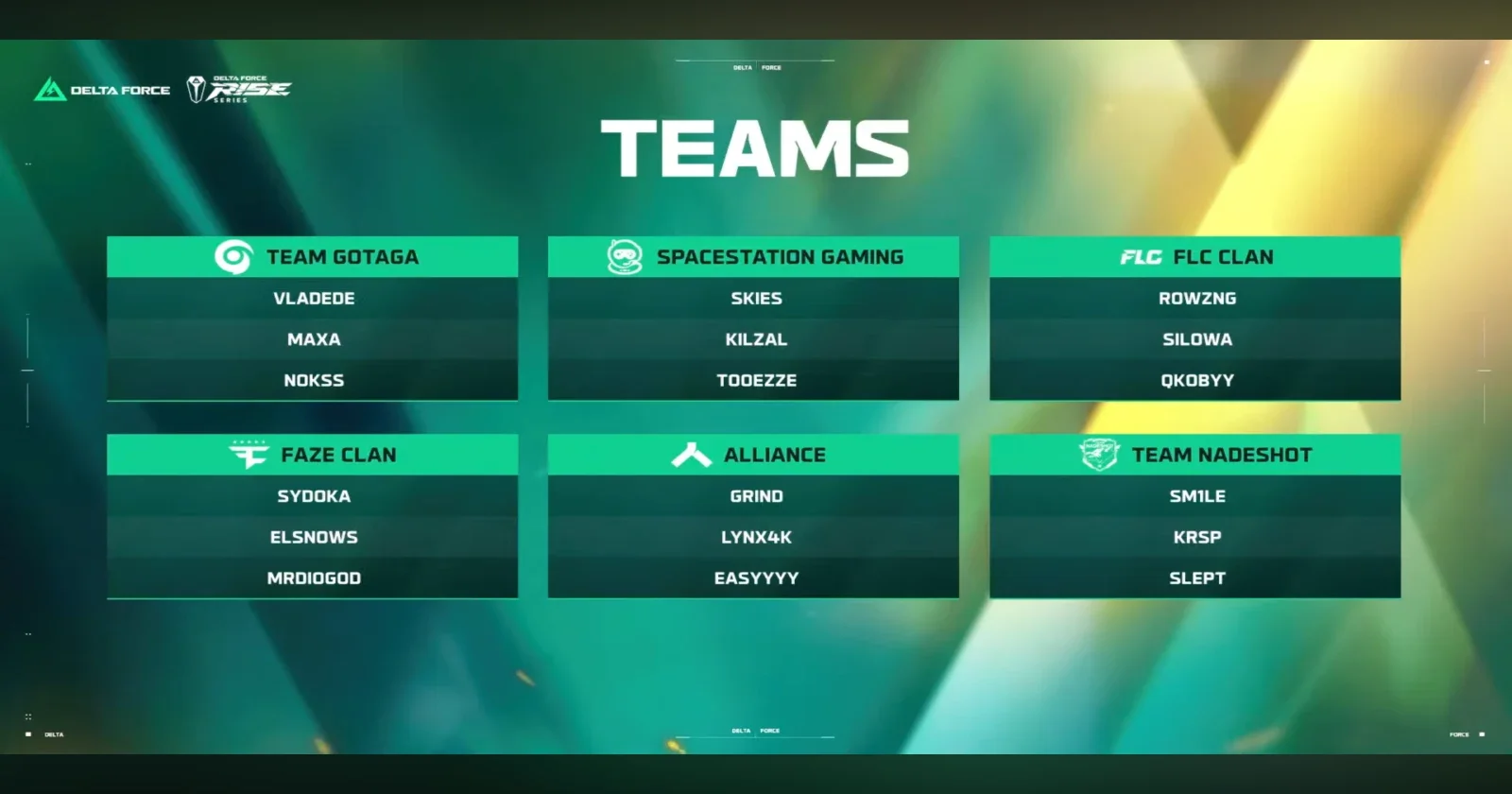
This guide breaks down the Mandelbrick and decoding rules, the full Rise Series map rotation, the Meltdown season's new AZ-3 content, the Rainbow Six Siege crossover, and the operator and item strategies that separated the top three teams (Alliance, Space Station Gaming, and Team Gotaga) in the most recent Time to Rise Show Match.
What Is a Mandelbrick in Delta Force?
A Mandelbrick is a special seasonal objective item that functions as the primary win condition in Rise Series matches. The first team to capture and fully decode two Mandelbricks wins the match immediately, triggering an instant tournament extract that ends the game regardless of the current kill or asset score.
Here's what makes it different from ordinary loot:
It spawns a short time after the match starts, so no squad can grab it directly off spawn.
Once picked up, the carrying squad has 5 minutes to reach a decoding station before it resets to its spawn point.
Base decode time is 4 minutes, but every successful steal at the station cuts the remaining time by 30 seconds, down to a 90-second floor.
The steal interaction itself only takes 1 second (down from 3 seconds in earlier patches), which is why you'll see players dive through smoke to snipe a decode at the last moment.
If the squad currently decoding gets wiped, the timer freezes until another squad reaches the console.
Why this matters for your strategy: a team with a huge kill lead can still lose the match in seconds if an opposing squad completes a second Mandelbrick decode. This is the mechanic that produced the most dramatic moment of the latest show match — more on that below.
Rise Series Rules: Economy, Kills, and Scoring
The Rise Series ruleset (also used in pro scrims) is built around a starting economy, kill rewards, and an asset-based tiebreaker, layered underneath the Mandelbrick win condition.
Starting resources and gear:
Every player starts with 1.5 million Technic Alloy.
Each player gets a 12-slot card holder and free 3×3 safe boxes for storage.
Teams on a losing streak receive bailout resources to stay competitive.
Scoring system:
Every kill grants 1 squad point and an automatic 800,000 Technic Alloy to the killer.
Every 2 million in total assets (stash value plus extracted loot) equals 1 squad point, rounded down.
Leaderboard order is decided first by Mandelbricks captured, then by total squad points.
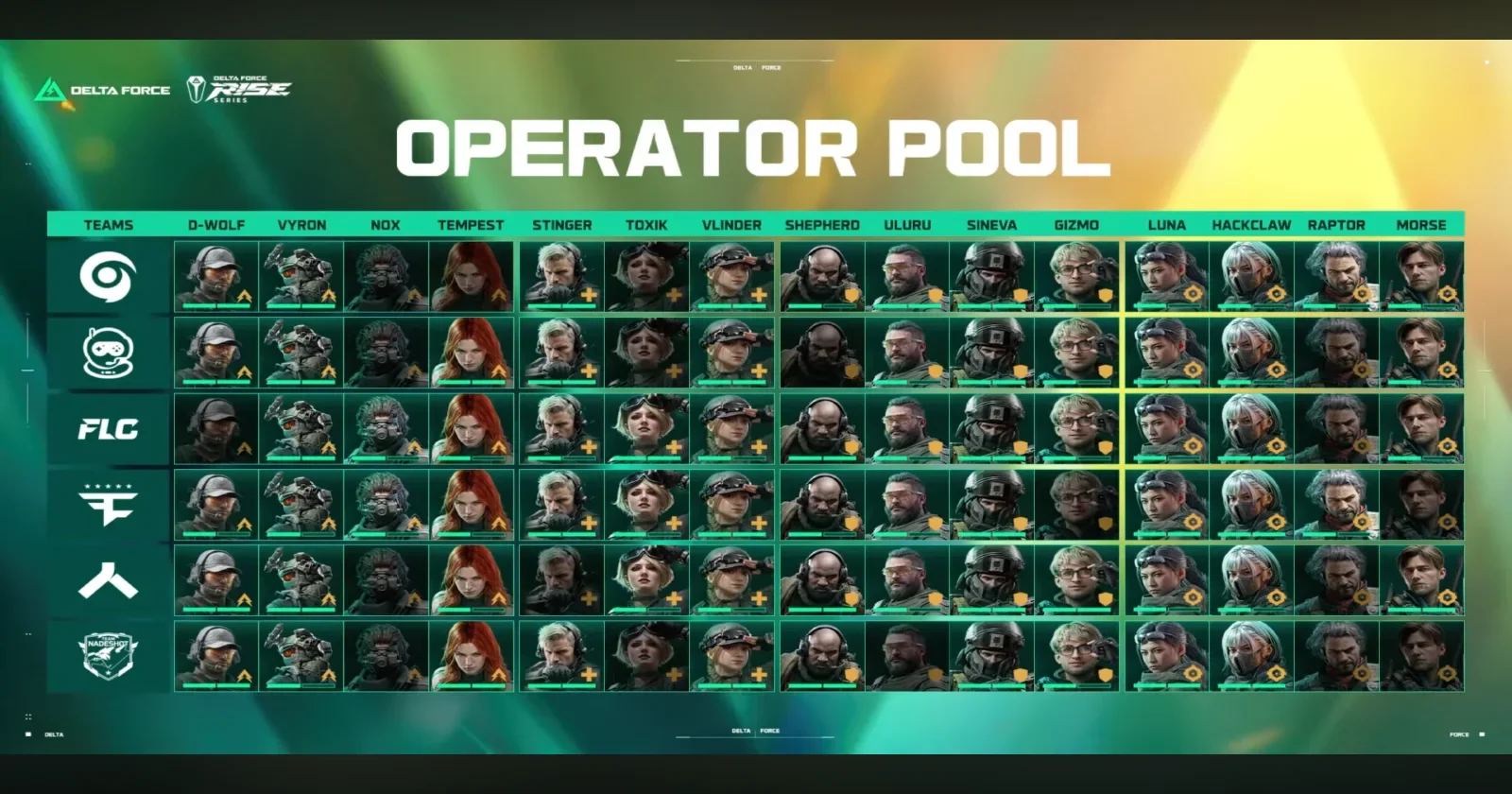
Operator limits: Each team can play any single operator a maximum of two times across the series. That cap only resets if the series reaches a seventh game. This is why you'll see teams rationing high-value operators like Tempest, Stinger, and Luna — burn them too early and you'll be stuck without your best decode-diving tool when it matters most on Space City.

Rise Series Map Rotation Explained
The standard round order is fixed, and understanding it helps you predict when the Mandelbrick fights will actually happen:
Round 1 – Zero Dam: Economy round with airdrops. No Mandelbrick.
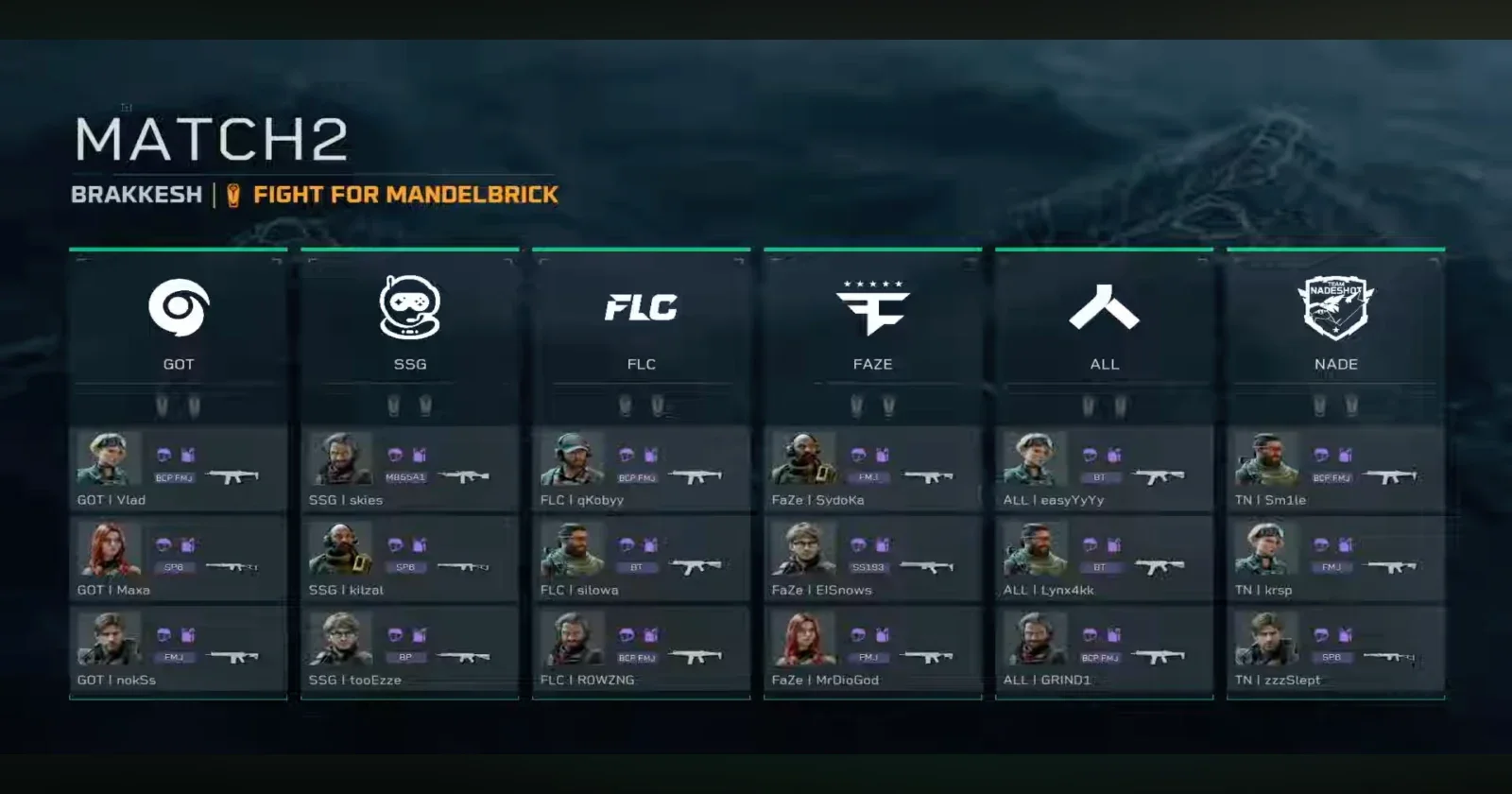
Round 2 – Brackish: Airdrop plus the first Mandelbrick of the match.
Round 3 – Tide Prison: Economy and loot round with airdrops, no Mandelbrick.
Rounds 4–6 – Space City: Played up to three times, with Mandelbricks in rounds 4, 5, and 6 if the series isn't already decided.
Round 7 (tiebreaker, if needed): The last-place team chooses between Brackish or Space City. Choosing Brackish adds an airdrop back into the round.
Extraction routes by map:
Zero Dam: the Admin elevator switch, a paid southern extract, and conditional no-backpack extracts.
Tide Prison: a pipeline gate extract that requires hacking a central computer, plus a helicopter pad that activates later and a standard backpack extract.
Space City: multiple decoding stations (Black Chamber, Hudson, the CEO building, and others), with late-game action usually collapsing onto a single high-risk exit.
Knowing these extract timings in advance is one of the simplest ways to improve your own squad's survival rate — most wipes in pub lobbies happen because players don't know a second or third extract option exists.
Best Operators and Item Strategy for the Rise Series Meta
Top operators by map:
Tempest is the core Mandelbrick tool. Her mobility and self-revive let squads dive through smoke to steal decodes in the final second — the exact play that decided the last show match.
Raptor remains the standard recon pick on open maps like Zero Dam and Brackish, with drones used to scout rotations and camped extracts.
Tide Prison rewards a slower, corridor-based kit: expect heavy Nox usage, often doubled up, alongside Hatclaw or Gizmo.
Space City favors Tempest, Stinger, and Luna, with Toxic and sometimes Uluru used for zoning and area denial around decoding stations.
Item economy tips:
Wooden sculptures, earned from boss fights and contracts (Wallbreaker on Zero Dam, the Helicopter Boss on Brackish, and AZ-3 or Tide Prison contracts), can be traded with tickets and extra Technic Alloy for early gold armor — a real power spike if you can farm them consistently.
AWM and M82 rounds are expensive and rare, so save them for airdrop fights or wipes where the 800k-per-kill payout justifies the cost. Burning them on economy rounds is one of the most common ways teams throw value away.
Don't undervalue dog tags: in casual lobbies they're minor, but in Rise Series customs they scale up to roughly 150,000 Technic Alloy each in late rounds.
Red-tier items (cleaners, typewriters, buoyancy devices) can swing a team's entire economy in a single pickup, which is why fighting for bosses and airdrops is usually more profitable than passive looting.
Meltdown Season Content: AZ-3 Nuclear Plant Mission

The Meltdown season's headline PvE mission sends players into AZ-3, Asara's only nuclear facility, which is now at risk of meltdown after sabotage at Reactor 2.
What to expect in the mission:
You'll need to breach Havoc defenses to get inside.
Radiation escalates through four levels, so managing exposure via decon chambers or mobile decontamination units is mandatory, not optional.
Contaminated containers give off a distinctive audio cue — learn it, because it signals nearby high-value loot.
Keys dropped by fallen personnel unlock classified zones holding rare intel and supplies.
Radiation leak zones hold some of the best loot in the mission, but the exposure risk means you should only push them with a decon plan already in place.
Enemies you'll face:
Purification soldiers and heavy purifiers apply corrosion and slow debuffs, but have exposed weak points on their backs that allow fast takedowns.
Relink agents, led by H-1000 and backed by H-47 and H-800, are networked and notably more persistent than standard AI enemies.
The mission escalates from sabotage to a power spike, a core meltdown warning, and finally a hydrogen explosion rated INES/INSC scale seven — a "major accident" classification — with a rapidly expanding contamination radius.
New Season Systems and Collectibles
Mandelbricks now have a chance to yield an AKM assault rifle in the current season.
Turbbricks can drop items from the "Law of Time" collectible charm series.
The Olay Olay Olay event lets you earn points toward sports-themed cosmetic rewards and exclusive avatars.
The Meltdown Season Pass includes tactical supplies, a new Tempest outfit, and additional cosmetics.
New Weapons and Gear in Meltdown Season
RM277: an assault rifle built for sustained suppressive fire, most effective at medium-to-long range.
SVCH: a long-range marksman rifle capable of one-shot kills against unarmored or lightly armored targets.
Elegy: a melee weapon exclusive to Abyss Shark Rhys, notable mainly for its cosmetic design rather than raw stats.
Rainbow Six Siege Crossover: What's Actually in It
Delta Force's Rainbow Six Siege crossover focuses on three operators — Doc, Montagne (Muteen), and Vigil — rebuilt with their original silhouettes, navy uniforms, and signature gear intact, plus dual patches referencing both Siege and Delta Force.
Key details:
Black Ice cosmetics are recreated using dual-layer materials, subsurface scattering, and internal ice-fracture effects to match the premium feel of the original Siege skin line.
Classic Siege elements like the drone and Alpha Pack system are referenced throughout the collaboration content.
Operator skins, Black Ice weapon skins, and themed collectibles are unlockable for free through in-season missions — you don't need to spend to get the core crossover content.
A new operations map reportedly hides additional Siege-themed surprises, though full details go live with the crossover's official launch.
If you're a Siege fan deciding whether the crossover is worth playing for, the free-unlock structure and faithful cosmetic recreation make it one of the more substantial collaborations Delta Force has run.
Show Match Recap: How Alliance Won With Two Mandelbricks
The most recent Time to Rise Show Match came down to a legendary late-game steal and a composed finish from Alliance. Here's the short version if you don't want to watch the full VOD.
Final standings:
1st: Alliance — 2 Mandelbricks (Brackish, Space City). Won via instant extract in game six.
2nd: Space Station Gaming — 1 Mandelbrick (Space City). Highest squad-point total: 32 kills, 17 asset points.
3rd: Team Gotaga — 1 Mandelbrick (Space City). Strong decode-station defense, standout Tempest dives.
The turning point: in the deciding round, Alliance rushed center and jammed the Mandelbrick into a decoding station almost immediately — but with the decode seconds from completing, SSG's Tempest player dove through stacked smoke and landed the steal with just one second left on the interaction window, resetting the timer and briefly saving SSG's chances. Alliance regrouped from a near-wipe, fought off Team Gotaga at the station, and closed out a second decode to trigger the instant win.
Why SSG still lost despite the better stats: SSG finished with the highest kill and asset totals in the lobby, but the Mandelbrick count is the primary tiebreaker in the Rise Series format. One Mandelbrick will always lose to two, no matter the score differential — which is exactly the lesson competitive teams (and viewers trying to read a match) should take from this result.
Action Items: How to Apply This to Your Own Games
Treat Mandelbricks as your primary objective, not a bonus — decode early to force other squads to react to you.
Ration Tempest, Stinger, Luna, and your best smokes for Mandelbrick rounds and Space City specifically.
Use lower-priority operators on economy maps like Zero Dam and Tide Prison to preserve your two-use limit on top picks.
Farm boss contracts (Wallbreaker, Helicopter Boss, AZ-3, Tide Prison) specifically for wooden sculptures and an early gold-armor spike.
Only spend AWM or M82 ammo when the payout is clear: airdrop fights, wipes on rich squads, or decodes where the 800k kill bonus offsets the ammo cost.
Learn each map's secondary extract before you need it — Zero Dam's Admin elevator, Tide Prison's pipeline gate and helicopter pad, and Space City's shifting late-game exits.
FAQ
What happens when a team captures two Mandelbricks? The match ends immediately through a special instant tournament extract. It doesn't matter what the score is at that point — two Mandelbricks is an outright win condition.
How long does it take to decode a Mandelbrick? The base decode time is 4 minutes, but each successful steal at the station reduces the remaining time by 30 seconds, down to a minimum of 90 seconds.
Can you steal a Mandelbrick that's already being decoded? Yes. Any squad can interact with the station to steal the decode, which resets the timer and hands control to the stealing team. The steal interaction itself takes just 1 second.
What operator is best for stealing a Mandelbrick decode? Tempest is the standard pick because of her mobility, self-revive, and rope-based traversal, which let her dive through smoke and enemy fire to reach the console.
How many times can you use the same operator in a Rise Series match? Twice per series. The limit only resets if the series goes to a seventh game.
Is the Rainbow Six Siege crossover free to unlock? Yes, the core crossover content — operator skins, Black Ice weapon skins, and themed collectibles — is unlockable for free through in-season missions rather than requiring a purchase.
What is the AZ-3 mission in Delta Force's Meltdown season? AZ-3 is a PvE mission set inside Asara's only nuclear facility, where players manage radiation exposure across four escalating levels while fighting Havoc forces and Relink agents to reach classified loot zones.